Want to master the art of b2b sales? It’s not just about making calls or sending emails—it’s a strategic game of trust, timing, and value. In this deep dive, we’ll unpack the real secrets behind high-performing b2b sales teams and how you can replicate their success.
Understanding the Fundamentals of B2B Sales

B2B sales—short for business-to-business sales—refers to transactions where one company sells products or services to another. Unlike B2C (business-to-consumer), b2b sales cycles are typically longer, involve multiple stakeholders, and require deeper relationship-building. The complexity of these deals demands a structured, strategic approach.
What Exactly Is B2B Sales?
B2B sales occur when a business offers goods or services to another business rather than individual consumers. Examples include software companies selling CRM platforms to enterprises, manufacturers supplying raw materials to producers, or consulting firms offering strategy services to corporations.
- Transactions are often high-value and long-term.
- Decision-making involves multiple stakeholders (e.g., procurement, finance, end-users).
- Sales cycles can last from weeks to over a year.
According to Forbes Business Council, over 70% of B2B buyers expect vendors to act as trusted advisors, not just sellers.
Key Differences Between B2B and B2C Sales
While both involve selling, the mechanics of b2b sales are fundamentally different from B2C:
- Decision Process: B2B decisions are rational, data-driven, and involve committees. B2C is often emotional and individual.
- Volume & Value: B2B deals are fewer but higher in value. B2C has higher volume but lower average order value.
- Relationship Depth: B2B requires long-term nurturing. B2C focuses on quick conversions.
“In b2b sales, you’re not just selling a product—you’re selling a solution to a business problem.” — HubSpot Sales Blog
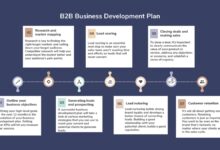
The B2B Sales Process: A Step-by-Step Breakdown
A well-defined b2b sales process is critical for consistency, forecasting, and scalability. While models vary, most high-performing teams follow a structured funnel with distinct stages.
1. Prospecting and Lead Generation
This is the foundation of any b2b sales strategy. Prospecting involves identifying potential customers who fit your ideal customer profile (ICP).
- Use tools like LinkedIn Sales Navigator, ZoomInfo, or Apollo.io to find decision-makers.
- Leverage inbound marketing (content, SEO, webinars) to attract qualified leads.
- Attend industry events and trade shows for direct engagement.
Effective prospecting isn’t about volume—it’s about relevance. A study by Salesforce found that 68% of high-performing sales teams use ICPs to guide their outreach.
2. Qualifying Leads
Not all leads are worth pursuing. Qualifying ensures you focus time on prospects with real potential.
- Use frameworks like BANT (Budget, Authority, Need, Timeline) or MEDDIC (Metrics, Economic Buyer, Decision Criteria, Decision Process, Identify Pain, Champion).
- Ask targeted questions to uncover pain points and buying intent.
- Disqualify early to avoid wasted effort.
Skipping qualification leads to longer cycles and lower win rates. Top performers spend 30% more time qualifying than average reps.
3. Needs Analysis and Discovery
This stage is where b2b sales professionals transition from seller to consultant. The goal is to deeply understand the prospect’s challenges, goals, and current solutions.
- Conduct discovery calls with open-ended questions.
- Map the buyer’s journey and identify key stakeholders.
- Document pain points and desired outcomes.
According to Gartner, 64% of buying groups feel sales reps don’t understand their needs—making this stage a major differentiator.
4. Presentation and Solution Proposal
Now it’s time to present your offering as the ideal solution. This isn’t a generic demo—it’s a tailored presentation based on the discovery phase.
- Highlight ROI, efficiency gains, and risk reduction.
- Use case studies and testimonials to build credibility.
- Customize proposals with pricing, timelines, and implementation plans.
A personalized proposal increases win rates by up to 40%, per research from Capterra.
5. Handling Objections
Objections are inevitable in b2b sales. Common ones include price, timing, trust, or internal resistance.
- Listen actively and empathize before responding.
- Reframe objections as opportunities to provide more value.
- Use data and social proof to overcome skepticism.
Top reps don’t avoid objections—they anticipate them. Prepare objection-handling scripts for common scenarios.
6. Closing the Deal
Closing in b2b sales is rarely a single moment. It’s often a series of approvals and negotiations.
- Use trial closes throughout the process (“If we can meet your budget, are you ready to move forward?”).
- Secure commitment from all stakeholders.
- Finalize contracts and onboard smoothly.
According to HubSpot, the average B2B sales cycle is 28 days, but can extend to 180+ days for enterprise deals.
7. Post-Sale Relationship Management
The sale isn’t over at signature. In fact, it’s just the beginning. Retention, upselling, and referrals start here.
- Assign a customer success manager to ensure smooth onboarding.
- Check in regularly to assess satisfaction and identify expansion opportunities.
- Turn happy clients into advocates through referral programs.
It costs 5–25x more to acquire a new customer than to retain one, making post-sale engagement a profit multiplier.
Key B2B Sales Models and Approaches
Not all b2b sales are executed the same way. Different models suit different industries, company sizes, and product types.
Inside Sales vs. Field Sales
Inside sales teams operate remotely, using phone, email, and video to close deals. Field sales involve in-person meetings and travel.
- Inside Sales: Cost-effective, scalable, ideal for mid-market and SMBs.
- Field Sales: Builds deeper trust, better for complex, high-value enterprise deals.
- Many companies use a hybrid model for maximum coverage.
According to Cornerstone OnDemand, inside sales productivity has increased by 30% since 2020 due to digital adoption.
Transactional vs. Strategic B2B Sales
Transactional sales are shorter, lower-touch deals (e.g., SaaS subscriptions). Strategic sales involve long-term partnerships and custom solutions (e.g., ERP systems).
- Transactional models rely on automation and volume.
- Strategic models require deep domain expertise and relationship management.
- Both can coexist within the same organization.
Understanding which model fits your product is key to structuring your b2b sales team effectively.
Account-Based Selling (ABS)
ABS is a targeted approach where sales and marketing collaborate to pursue high-value accounts as markets of one.
- Identify key accounts with high potential ROI.
- Create personalized campaigns for each account.
- Engage multiple stakeholders with tailored messaging.
Companies using ABS report 200% higher win rates, per ABM Leadership Alliance.
Essential Tools and Technologies for B2B Sales
Modern b2b sales rely heavily on technology to streamline processes, improve visibility, and boost productivity.
CRM Systems: The Backbone of B2B Sales
A Customer Relationship Management (CRM) system like Salesforce, HubSpot, or Zoho is essential for tracking interactions, managing pipelines, and forecasting revenue.
- Centralizes contact and deal data.
- Automates follow-ups and task reminders.
- Integrates with email, calendar, and marketing tools.
Sales teams using CRM see a 29% increase in win rates, according to Nucleus Research.
Sales Engagement Platforms
Tools like Outreach, Salesloft, and Groove automate outreach sequences across email, phone, and social channels.
- Enable multi-touch cadence automation.
- Provide analytics on email open and reply rates.
- Integrate with CRM for seamless workflow.
These platforms help sales reps scale personalized communication without sacrificing quality.
Prospecting and Data Tools
Accurate data is the lifeblood of b2b sales. Tools like Clearbit, Lusha, and Hunter.io help find and verify contact information.
- Enrich leads with firmographic and technographic data.
- Identify decision-makers and influencers.
- Reduce time spent on manual research.
Using enriched data improves outreach accuracy by up to 50%, per LinkedIn Sales Solutions.
The Role of Content in B2B Sales
Content isn’t just for marketing—it’s a powerful b2b sales enablement tool. From whitepapers to case studies, content helps build credibility and guide buyers through complex decisions.
How Sales Teams Use Content
Savvy b2b sales professionals use content at every stage of the funnel:
- Prospecting: Share industry insights or benchmark reports to spark interest.
- Discovery: Send case studies that mirror the prospect’s challenges.
- Closing: Provide ROI calculators or implementation timelines.
According to Sales Enablement Society, 73% of sales reps say content helps them close deals faster.
Types of High-Impact B2B Sales Content
Not all content is created equal. The most effective types include:
- Case Studies: Real-world proof of value and results.
- Whitepapers & eBooks: Deep dives into industry problems and solutions.
- Product Demos & Videos: Visual explanations of features and benefits.
- ROI Calculators: Quantify the financial impact of your solution.
Content should be easily accessible within the CRM or sales enablement platform.
Aligning Sales and Marketing Content
One of the biggest b2b sales challenges is misalignment between sales and marketing. When content is created in silos, reps can’t use it effectively.
- Hold regular sync meetings between teams.
- Create a shared content repository.
- Use feedback from sales to improve future content.
“The most successful b2b sales organizations treat content as a team sport.” — MarketingProfs
Measuring Success in B2B Sales
You can’t improve what you don’t measure. Tracking the right KPIs is essential for optimizing b2b sales performance.
Key B2B Sales Metrics to Track
Focus on metrics that reflect both activity and outcomes:
- Conversion Rates: From lead to opportunity, opportunity to close.
- Average Deal Size: Helps identify high-value segments.
- Sales Cycle Length: Shorter cycles mean faster revenue.
- Customer Acquisition Cost (CAC): Total cost to acquire a customer.
- Customer Lifetime Value (CLTV): Total revenue from a customer over time.
CLTV:CAC ratio should ideally be 3:1 or higher.
Sales Forecasting Accuracy
Forecasting is both an art and a science. Accurate forecasts help leadership plan budgets, hiring, and strategy.
- Use pipeline stages with clear criteria for progression.
- Regularly review deal health and risk factors.
- Leverage AI-powered forecasting tools like Clari or Gong.
Teams using AI forecasting report 25% higher accuracy, per Gartner.
Win-Loss Analysis
Understanding why you win or lose deals is critical for continuous improvement.
- Conduct post-mortems on lost deals.
- Interview customers who chose competitors.
- Identify patterns in pricing, messaging, or product gaps.
Win-loss analysis can uncover blind spots that internal data alone can’t reveal.
Future Trends Shaping B2B Sales
The world of b2b sales is evolving rapidly. Staying ahead requires awareness of emerging trends and technologies.
The Rise of AI and Automation
Artificial intelligence is transforming b2b sales with predictive analytics, chatbots, and automated insights.
- AI-powered tools like Gong and Chorus analyze sales calls to provide coaching.
- Chatbots handle initial inquiries and qualify leads 24/7.
- Predictive lead scoring identifies high-intent prospects.
By 2025, 75% of high-performing sales teams will use AI daily, predicts McKinsey.
Buyer-Centric Selling
Modern buyers are more informed and empowered than ever. They research independently before engaging sales.
- Sales reps must add value, not just pitch.
- Focus on insights, not features.
- Adopt a consultative, advisory role.
Gartner calls this the “buyer-driven” era, where 60% of the purchase journey is digital and self-guided.
Remote Selling and Virtual Engagement
The pandemic accelerated the shift to virtual selling, and it’s here to stay.
- Video meetings are now standard for demos and negotiations.
- Digital contract signing (e.g., DocuSign) speeds up closing.
- Virtual events and webinars replace in-person conferences.
Remote selling reduces costs and expands geographic reach, but requires strong digital presence and engagement skills.
Building a High-Performance B2B Sales Team
Even the best strategies fail without the right team. Building a winning b2b sales culture requires investment in people, process, and tools.
Hiring the Right Talent
Look beyond experience—seek curiosity, resilience, and emotional intelligence.
- Use structured interviews and role-playing exercises.
- Assess cultural fit and learning agility.
- Prioritize candidates with industry knowledge.
Top performers are 10x more productive than average reps, making hiring a strategic priority.
Training and Onboarding
A structured onboarding program can reduce ramp time by 50%.
- Cover product knowledge, sales process, and CRM usage.
- Pair new hires with mentors.
- Include role-playing and real-world simulations.
According to Cornerstone, companies with formal onboarding see 89% higher retention rates.
Coaching and Continuous Development
Great salespeople aren’t born—they’re developed.
- Conduct regular 1:1 coaching sessions.
- Use call recordings and deal reviews for feedback.
- Encourage peer learning and knowledge sharing.
Sales teams that receive weekly coaching achieve 23% more quota attainment, per Force Management.
What is the average length of a B2B sales cycle?
The average B2B sales cycle ranges from 28 to 180 days, depending on the industry, deal size, and complexity. Simple SaaS deals may close in under a month, while enterprise software or infrastructure sales can take six months or more.
How can I improve my B2B sales conversion rate?
Focus on better lead qualification, personalized outreach, and consultative selling. Use data to understand where prospects drop off and optimize those stages. Invest in sales enablement content and regular coaching.
What are the most important skills for B2B sales professionals?
Top skills include active listening, problem-solving, negotiation, emotional intelligence, and industry knowledge. The ability to build trust and communicate value clearly is critical in b2b sales.
Is cold calling still effective in B2B sales?
Yes, but only when done strategically. Personalized, research-based cold calls with clear value propositions can still generate meetings. However, it’s most effective when combined with email, social selling, and content outreach.
How does account-based selling work?
Account-based selling targets high-value accounts with customized campaigns. Sales and marketing collaborate to engage multiple stakeholders with personalized messaging, treating each account as a market of one.
Mastering b2b sales requires a blend of strategy, empathy, and execution. From understanding the buyer’s journey to leveraging cutting-edge tools, every element plays a role in driving revenue. The most successful teams don’t just sell—they solve problems, build trust, and create long-term value. By adopting proven processes, investing in people, and staying ahead of trends, any organization can elevate its b2b sales performance and achieve sustainable growth.
Further Reading:
